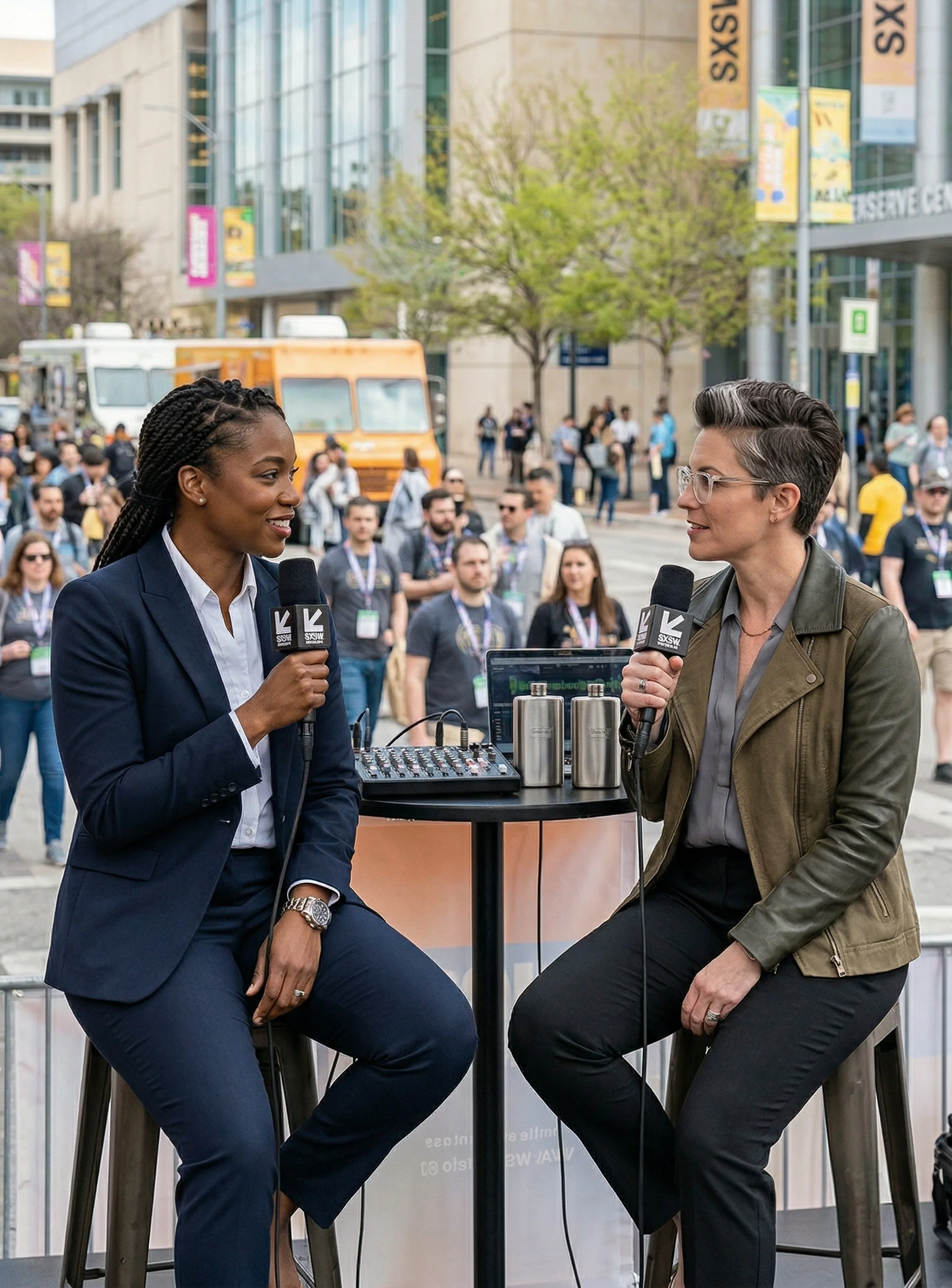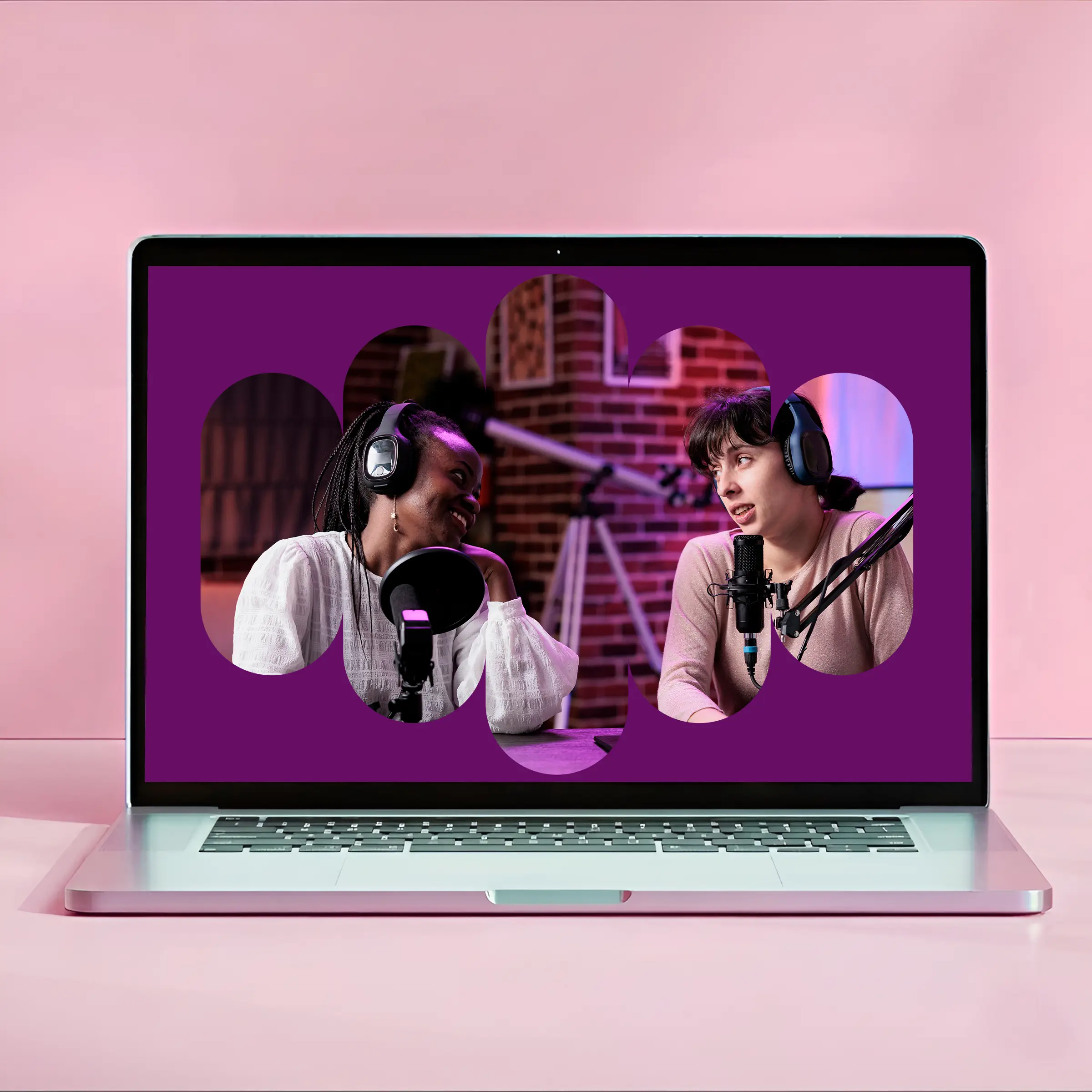
Lights. Camera. Action. Even before you say a word, your environment has already said so much.
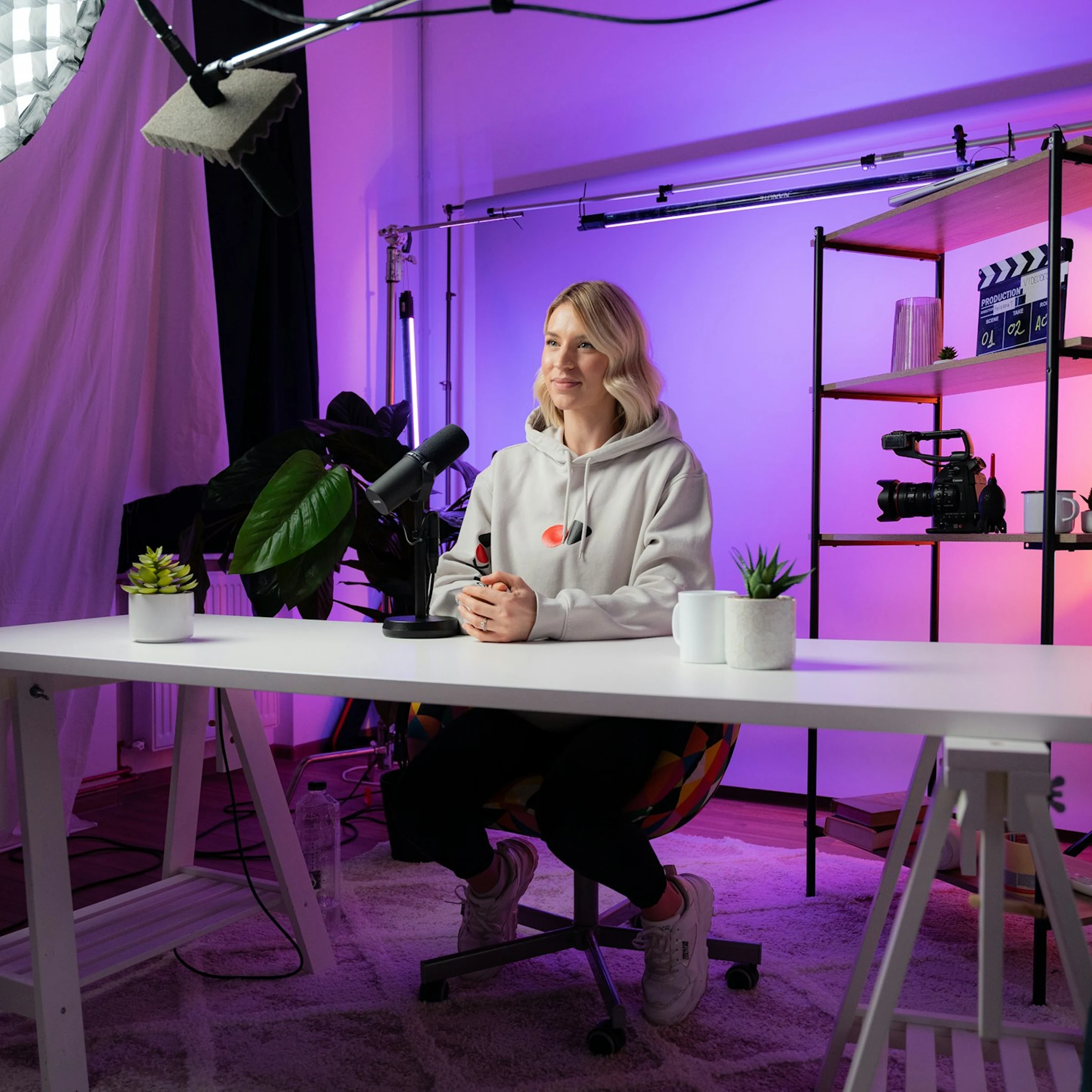
The bookshelf behind you. The light source to your left. The acoustic ceiling tiles visible just above the frame. The window blowing you out in the background. Every element of your physical setting says so much to your audience. It's communicating for you before your very first word, right when everyone watching is deciding whether to stick around.
This is not an aesthetic argument. It's a credibility one.
What your background is actually saying
Audiences are sophisticated readers of environment. They may not consciously clock the single overhead fluorescent washing out your face, but they feel it. They may not articulate why the cluttered open office behind you is distracting. It is absolutely weighing in on the credibility of what you're saying.
Setting functions as subtext. A thoughtfully composed background signals preparation. It signals that the message was considered worthy of effort. It signals, in the most primal visual language available, that you take this seriously and that perhaps so should they.
The inverse is equally true. A makeshift setup. Laptop propped on a stack of books, blinds half-drawn against afternoon glare, the ambient noise of an open floor plan bleeding into every pause. None of it looks professional. It quietly undermines the content itself. The best-written messages in the world lose ground when the delivery environment contradicts it.
The three elements doing the most work
Not every organization has a dedicated studio. But while the dedicated in-office studio trend is growing, it isn't essential to make a meaningful improvement right away. The variables that matter most are very simple.
Light. It is the single highest-leverage production decision available to anyone with a camera. Natural light from in front of you. Not from behind. Not on the side. Effective facial illumination transforms the quality of any recording right away. A ring light or a softbox achieves the same at any hour. The face that is clearly, warmly lit reads as present and trustworthy. The face fighting a backlit window reads as an afterthought.
Background. Intentional over busy. A clean wall, a considered set of objects, a subtle depth of field, these work. An open office, a cluttered credenza, a door that colleagues keep walking through, these compete. The background should support the speaker and the message, not distract from them.
Framing. As a speaker in a room, the boundaries are the walls, floor, and ceiling. On camera, those boundaries are much more narrow and how we position ourselves in that box makes a world of difference. In effect, we're visually telling the audience where to focus their attention while balancing some breathing room. Vertically, the subject should be at the center or just above. Horizontally, the subject's position reflects message intention. When we're centered, it's all eyes on the speaker. But off to the side, the mind already anticipates something else sharing the spotlight.
Why this matters more now than it ever has
The volume of video in enterprise communication continues to grow exponentially. Town halls, all-hands meetings, executive messages, webinar programs, event keynotes. Organizations are producing more video content than at any point in history.
At the same time, our audiences are watching more video than ever. And they're comparing the viral videos on social media and the latest gripping season from their streaming service to your latest message. That benchmark has shifted. Employees who stream high-production content at home do not reset their expectations when they open the company all-hands. They bring those expectations with them.
The organizations that understand this are not investing in production for vanity. They are investing because the production standard of their video communication is now a direct reflection of how seriously they take the people watching it.
The room is always part of the message
There is no neutral setting. Every choice from the chair to the background, and the light to the frame. It is either working for your message or against it. The good news is that the difference between a setup that undermines your content and one that elevates doesn't have to be expensive. But it must always be intentional.
Start there. Intention is free.