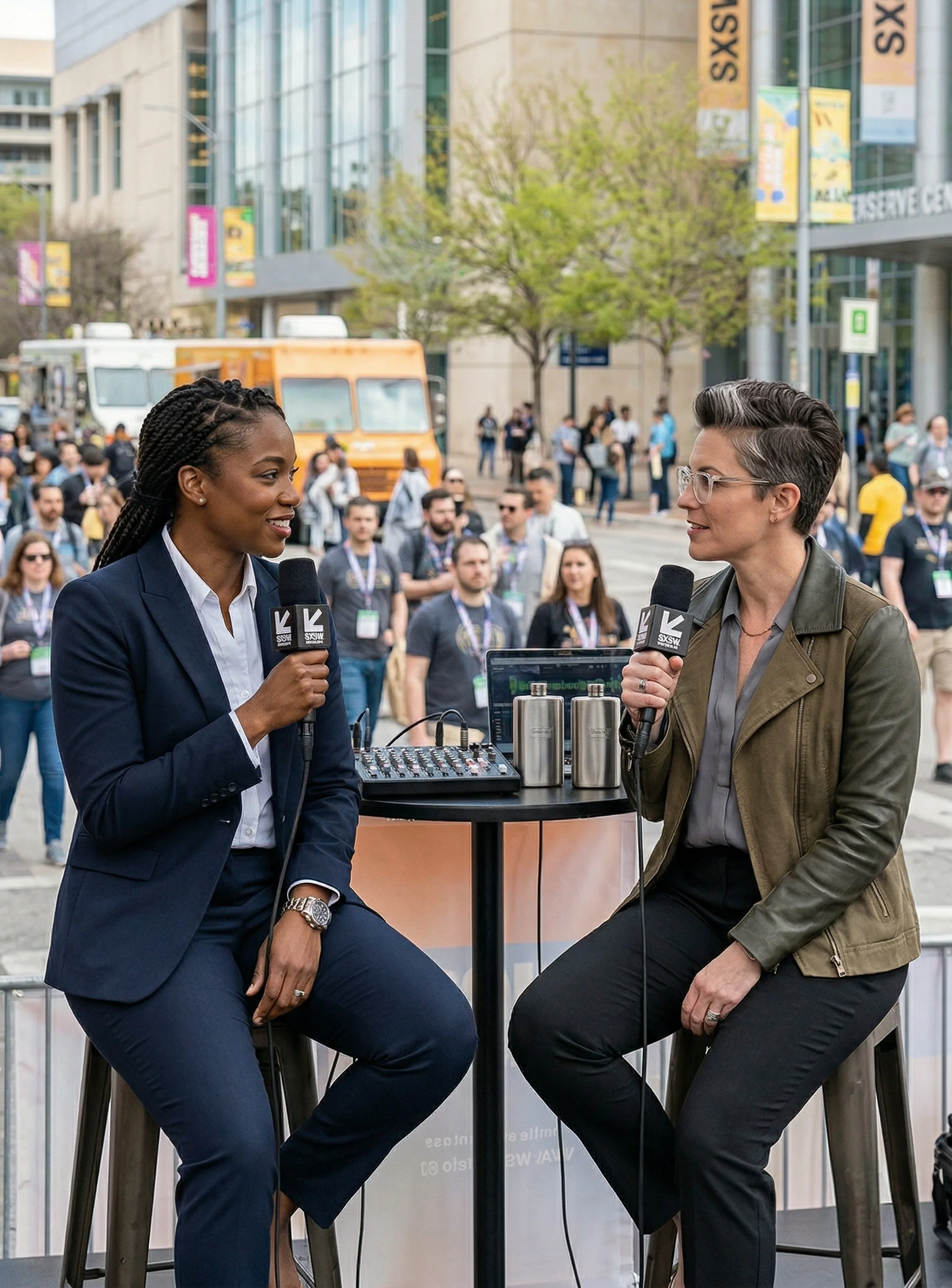
Every year, SXSW takes the temperature of where the intersection of media, technology, and culture are headed. This year, one signal was impossible to miss. Conversation after conversation, stage after stage, the medium commanding the most attention was podcasting. Not as a niche creator hobby. As a mainstream business strategy.
Podcast Movement Evolutions embedded itself directly into the SXSW programming this year, effectively turning Austin into the podcasting industry's most visible stage. YouTube hosted an event specifically dedicated to the future of video podcasting. Spotify leaned into its creator ecosystem as a core platform narrative. The message from every direction was the same: the podcast is no longer a side channel. It is where audiences are choosing to spend their attention.
The business world has been slow to receive that message. It should not any longer.
Why podcasting is not a crowded field
The first instinct when a medium reaches saturation in the cultural conversation is to assume the opportunity has passed. Podcasting inverts that logic. It is not a zero-sum medium. There is no finite shelf space, no limited broadcast window, no algorithm that buries new entrants in favor of established players in the way social media does. The audience for podcasting is not a fixed pool being divided among more and more shows. It is an expanding universe of people actively seeking content that is worth their time.
More importantly, podcasting is one of the only content formats that builds a subscriber relationship by design. A listener who follows a show has made a deliberate choice to invite that voice back. They are not passively scrolling past it. They opted in. For a business trying to build a consistent relationship with a defined audience, whether that is customers, prospects, partners, or employees, that opt-in dynamic is extraordinarily valuable and nearly impossible to replicate through any other channel at the same cost.
The video shift changes the calculation entirely
What made SXSW 2026 a genuinely significant moment for business communicators was not the validation of podcasting itself. It was the confirmation of where podcasting is heading next.
Video is the podcast's next frontier, and the momentum behind that shift is now undeniable. Apple announced a native high-definition video podcast experience. YouTube positioned itself explicitly as the home of video podcasting, with top creators and platform executives making the case on stage together. The data behind the shift is equally clear: the majority of podcast campaigns now include a video component, and video-first shows are winning on discoverability, shareability, and audience depth in ways that audio-only formats cannot match.
For a business, that shift is not a complication. It is a multiplication.
One conversation. Two assets.
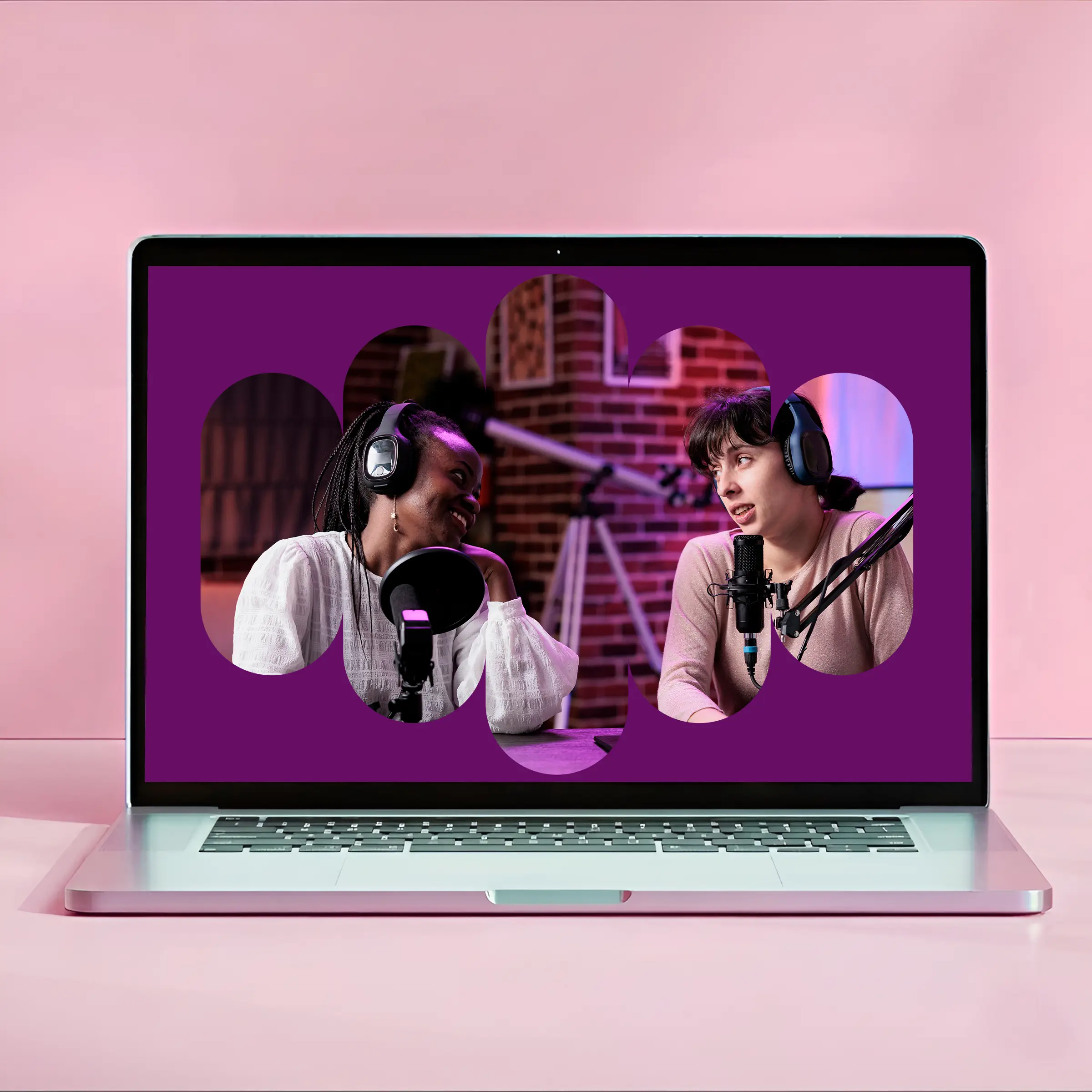
The practical implication of the video podcast format is something every content-stretched marketing and communications team should understand clearly. A single recorded conversation produces two distinct content assets for two distinct audiences. One session, one setup, one hour of production equals two assets at least.
The audio feed reaches the listener who commutes, exercises, or works with something playing in the background. They are loyal, they are engaged, and they are choosing to spend uninterrupted time with your perspective on the world. The video feed reaches the viewer who wants to see the conversation, who shares clips on social platforms, who discovers the show through a YouTube search they would never have made in a podcast app. These are not the same person. Both are worth reaching.
The repurposing potential extends further. A single episode produces short-form video clips for social. It produces a transcript that becomes a written piece. It produces quotable moments that become graphics. One conversation, produced once, distributed everywhere. For organizations already producing too much content with too few people, that efficiency is not a bonus. It is the argument.
What this means for businesses that communicate for a living
The organizations paying attention at SXSW this year were not just media companies and creators. They were brands and businesses recognizing that the line between media company and enterprise organization is dissolving faster than most strategy decks have accounted for.
The company that produces a consistent, substantive podcast builds something that cannot be bought through advertising: a recurring relationship with an audience that has chosen them. The executive whose perspective shows up regularly in someone's earbuds, on their television, or their phone occupies a different position in that person's consideration than the executive whose messaging appears only in press releases and quarterly reports.
Podcasting is not a content tactic. It is an audience strategy. And the window to build that audience before the field gets genuinely competitive is still open.
SXSW just told you it will not be open forever.