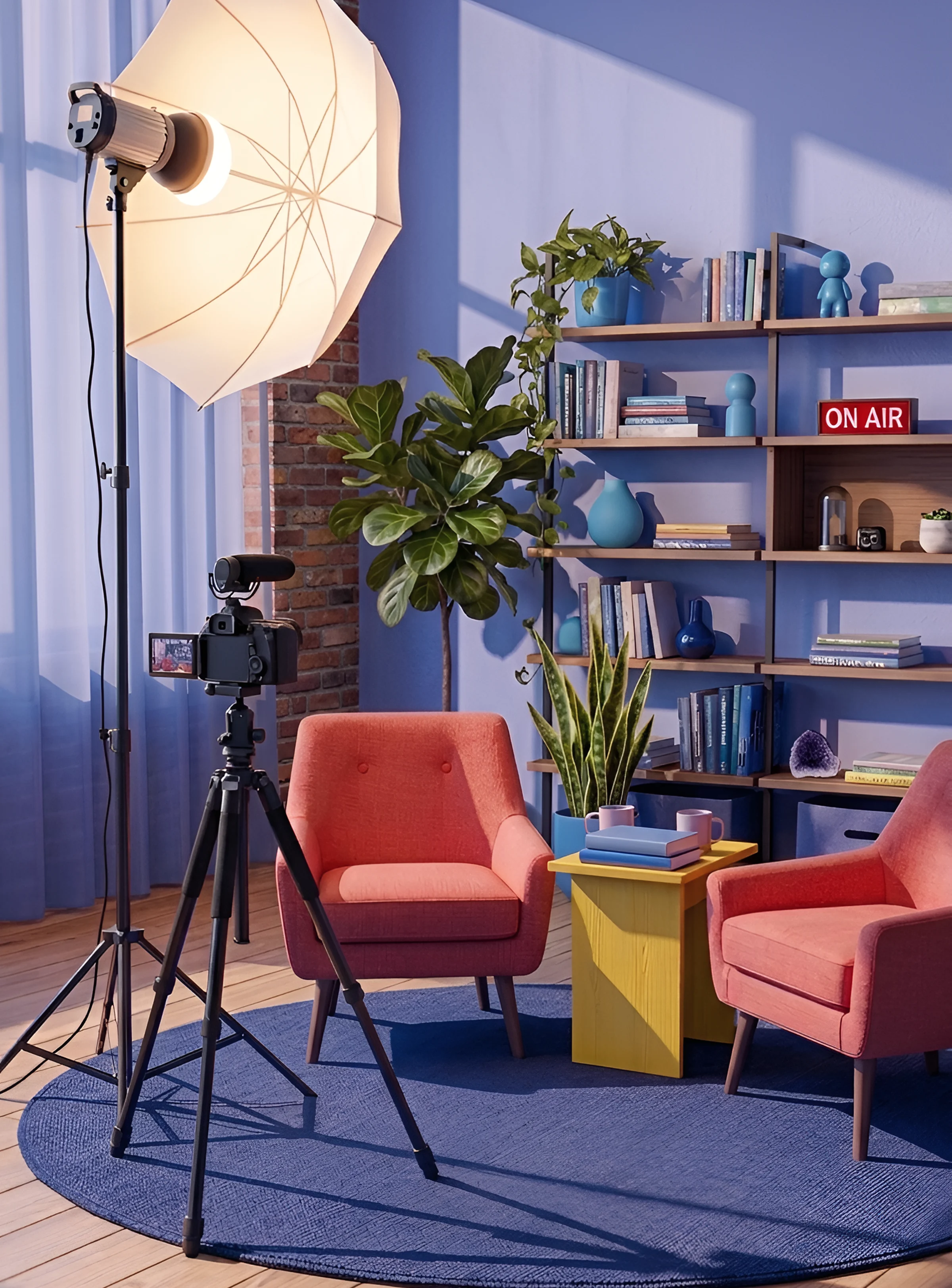
At some point in the last decade, every major media company, sports franchise, and political campaign made the same quiet decision: they stopped relying on outside infrastructure to tell their story. They built the capability in-house. A dedicated space. Controlled lighting. A camera that was always ready. The ability to produce and publish on their own terms, on their own timeline.
The enterprise is arriving at the same inflection point. Just a few years behind.
The case isn't about production. It's about velocity.
The organizations building in-office studios are not doing it because they want to look like a television network. They are doing it because they have figured out something the rest of the market is still learning: the moment you need to communicate something important, the last thing you want is a logistics problem standing between the message and the audience. Timing is everything, as they say.
A reorg announcement. A response to market news. A leadership transition. A cultural moment that requires the CEO to speak directly, personally, and immediately to the entire organization. These are not scheduled events. They arrive without notice. And when they do, the quality of the communication, speed, clarity, and production standard. These determine whether the message lands with the weight it deserves or dissipates into the noise.
Organizations without a dedicated space improvise. They find a conference room with acceptable light. They test three laptop positions to get the framing right. They spend forty minutes solving a problem that should not exist. And then, tired and distracted, they press record.
Organizations with a dedicated space walk in, sit down, and communicate.
What leadership is actually investing in
The in-office studio is not a line item in the AV budget. It is an investment in the reliability and quality of leadership communication.
Consider what it enables. A consistent visual identity across every piece of video the organization produces. An environment where executives are comfortable because they have been there before. A setup that requires no decisions on the day. The light is right, the frame is set, the background reflects the brand. The only variable is the message itself.
That consistency compounds. Audiences, employees, customers, stakeholders. They develop a relationship with the visual language of an organization's communication. When that language is coherent and considered, trust compounds. When it is inconsistent, improvised, and visually apologetic, so is the perception of the organization behind it.
Leadership communication is brand communication. The studio is where that brand is either protected or compromised, one recording at a time.
The threshold is lower than most organizations assume
The conversation about in-office studios often stalls at the wrong question. The wrong question is: what would a world-class studio cost? The right question is: what does it cost to communicate at the standard this organization's messages deserve?
The answer to the second question is more accessible than most leadership teams expect. A dedicated space, even a modest one with intentional lighting, a clean and branded background, and a fixed camera setup eliminates the majority of variables that undermine video quality. The investment is less about equipment and more about commitment. Committing a room. Committing a setup. Committing to the idea that internal communication is worth a permanent address.
The organizations that have made that commitment are not going back. The velocity alone justifies it. The quality is the bonus.
The question worth asking
How many times in the last quarter did your organization need to communicate something significant via video? How many of those moments were served by a setup that matched the weight of what was being said?
The studio does not change what leaders communicate. It changes whether anyone believes it.