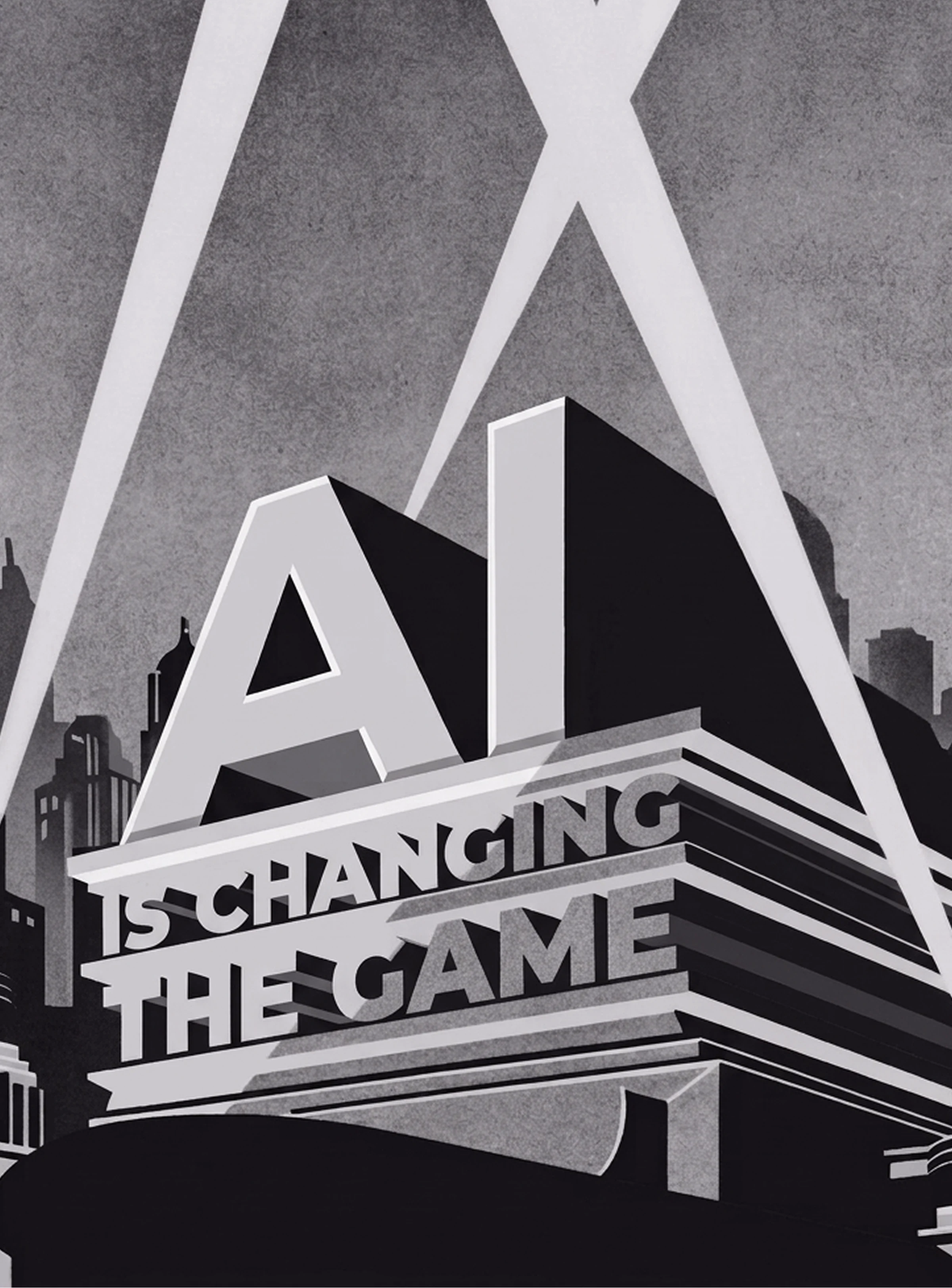
AI won't replace your marketing team. It will raise the bar for what they produce.
Category: The Feed Nudge: Webinar+ Target read time: 4 minutes
The conversation about AI and marketing has spent a lot of time in the wrong place. The question of whether AI will replace marketers is, at this point, less interesting and less useful than the question it has been obscuring: what does a marketing team look like when AI handles everything it is genuinely better at?
The answer is not a smaller team doing the same work. It is the same team doing work that was previously impossible at the speed and scale now available to them.
That is a meaningful upgrade. It is also a meaningful challenge. Because when the tools available to every marketing team improve simultaneously, the baseline expectation for what a marketing program should produce rises with them. The organizations that treat AI as a way to do less will find themselves producing average work faster. The organizations that treat it as a way to do more will find themselves operating at a level their competitors cannot match without the same commitment.
What AI is actually good at in a marketing context
The capabilities that AI brings to marketing are real and, in the right applications, genuinely transformative. The speed at which it can process audience data and surface meaningful segments. The precision with which it can personalize outreach at a scale no human team could sustain manually. The consistency with which it can execute follow-up sequences calibrated to individual behavior rather than broad cohort assumptions.
These are not small improvements on existing workflows. They represent a categorical shift in what is operationally possible for a team of a given size. A demand generation function that previously needed three people to execute a segmented post-event follow-up sequence can now execute a more sophisticated version of that sequence with one person overseeing the system rather than running it manually.
The time that frees up is not a bonus. It is the point. The question is what the team does with it.
Where human judgment becomes more valuable, not less
The capabilities AI does not have are precisely the ones that determine whether a marketing program produces outcomes or merely produces activity. The strategic judgment about which audience is worth reaching and why. The creative instinct that produces a message worth paying attention to rather than one that merely clears the bar of relevance. The understanding of a specific market, a specific buyer, and a specific moment that no training data can fully replicate.
These capabilities were always the most valuable things a marketing team possessed. They were also, historically, the things most crowded out by the operational work that AI is now absorbing. The marketer who spent half their week on list management and manual follow-up sequences had half as much time for the strategic and creative work that actually differentiated the program.
AI does not make that judgment and creativity less necessary. It makes them more visible, because when the operational floor rises for everyone, the ceiling is determined entirely by the quality of the human thinking on top of it.
What operationalizing AI actually looks like
The marketers moving fastest right now are not just using AI to generate copy or summarize reports. They are building systems. Entire workflow functions that previously required a specialist, a vendor, or a headcount approval are being architected and automated by a single marketer with a clear brief and the right AI tools.
A campaign that once required a project manager, a copywriter, a data analyst, and a three-week timeline is being conceived, sequenced, personalized, and launched by one person in a fraction of that time. CRM logic that once required a developer to implement is being mapped, tested, and deployed conversationally. Content programs that once needed an agency are being run in-house, at volume, with strategic oversight that is sharper because the person running it is no longer buried in execution.
This is not a hypothetical future state. It is what the most capable marketing teams are doing right now, and the organizational structures built around the assumption that these functions require dedicated headcount are being quietly stress-tested by the results.
The practical implication is straightforward and slightly uncomfortable. The work that previously represented a competent execution of the function is now the minimum. Segmented lists, timely follow-up, personalized outreach at scale: these are table stakes, not differentiators, in a world where every team has access to tools that make them achievable.
Differentiation now lives in the decisions that precede the execution. The choice of audience and the precision of the targeting. The quality of the content that earns attention before the follow-up sequence ever fires. The strategic clarity about what the program is actually trying to accomplish and whether the activity it generates is connected to that goal.
Marketing teams that have absorbed this shift are not working less. They are working on harder things with better tools, and the gap between their output and the output of teams still running manual processes is widening faster than most organizations have recognized.
The right question to be asking
The marketing function that will be most effective in the next three years is not the one that has replaced the most humans with AI. It is the one that has most effectively combined what AI does well with what the humans on the team do better than any model can.
That combination looks like a team spending less time executing and more time deciding. Less time on the operational machinery of a program and more time on the strategic and creative questions that the machinery exists to serve.
AI will not replace that team. It will make crystal clear, faster than anything else currently available, exactly how good that team actually is.